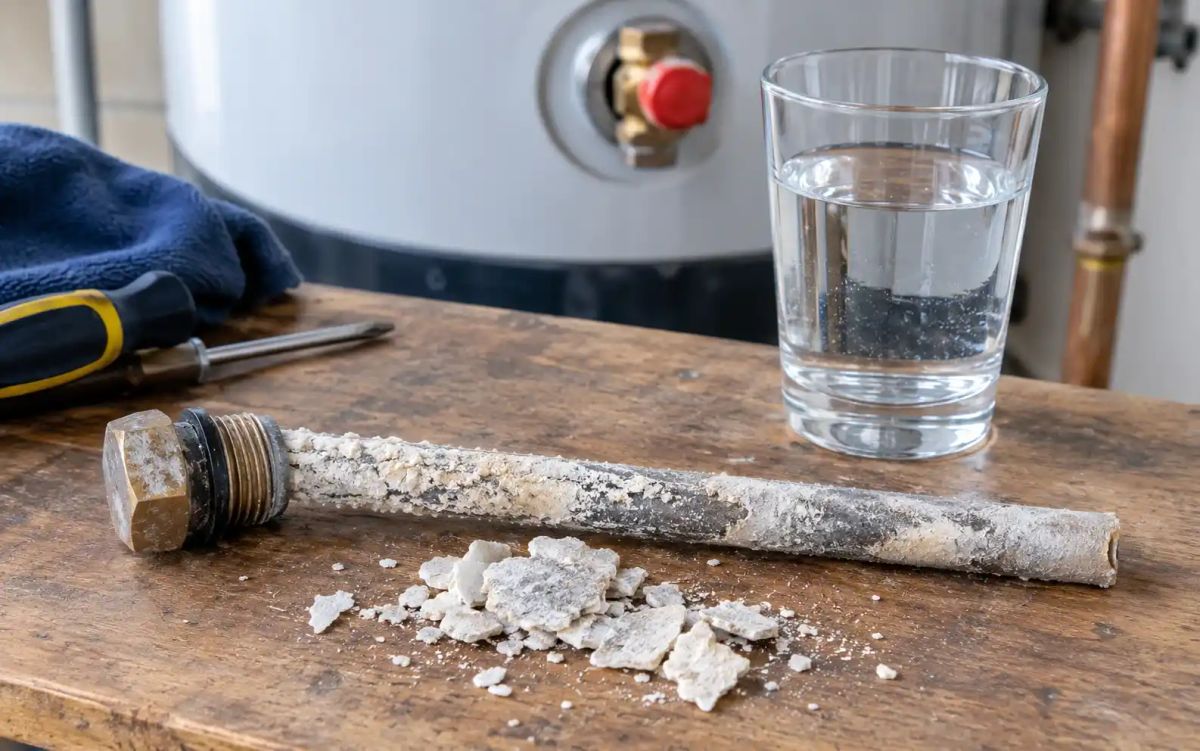
If your water heater pops, rumbles or runs out of hot water sooner than it used to, the water itself may be part of the reason. The City of Clovis reported an average hardness of 116.4 ppm in its 2023 water quality report. That's not extreme, but it leaves minerals in your tank every single day.
This guide explains what that number means, what the minerals do inside a tank, and the simple upkeep that helps a water heater last longer.
How Hard Is Clovis Water?
Clovis water sits at the top of the "moderately hard" range on average, and some parts of the system run much harder.
The U.S. Geological Survey sorts water by its calcium carbonate content:
| USGS category | Hardness (mg/L or ppm) | Grains per gallon |
|---|---|---|
| Soft | 0 to 60 | 0 to 3.5 |
| Moderately hard | 61 to 120 | 3.5 to 7 |
| Hard | 121 to 180 | 7 to 10.5 |
| Very hard | Over 180 | Over 10.5 |
Clovis averaged 116.4 ppm in 2023, or about 6.8 grains per gallon. But the City's report also showed a range from 7.3 to 280 ppm. That top number is well into "very hard."
Why the spread? In 2023, Clovis water came about 53% from groundwater and 47% from Kings River surface water, with 37 wells in the system. Groundwater usually carries more minerals. So depending on which wells feed your street, your water may be much harder than the city average.
What Scale Does Inside a Water Heater
Heating water pushes calcium and magnesium out of it. The minerals settle to the bottom of the tank as sediment, and some harden into scale. A little more is added every time the tank refills.
Here's how that buildup wears a water heater down:
Signs Scale Is Building Up in Your Tank
Watch for these in a Clovis home:
Water around the base is the one to act on right away. It can mean the tank is failing. Close the cold water valve on top and call a plumber.
Hearing popping from the tank or running out of hot water early? Call Clovis Rooters at (559) 418-4780, 24/7. We'll check the tank, the anode rod and the drain valve, then explain whether a flush, a repair or a replacement makes sense. See our water heater repair and replacement service.
Simple Upkeep That Helps a Tank Last Longer
You can't change the water coming into your home. You can slow down what it does to your tank.
One caution: If your tank hasn't been flushed in years, the first flush can stir up heavy sediment. It may clog the drain valve or leave it leaking. In that case, let a plumber handle the first one.
When Upkeep Isn't Enough
Flushing can't fix a tank that's already rusting through. Replacement is usually the better choice when you see:
If you replace it, California law requires the new water heater to be strapped for earthquakes. A good installer handles that as part of the job.
Talk to a Clovis Plumber About Your Water Heater
If your heater is noisy, slow or leaking, call Clovis Rooters at (559) 418-4780. We answer 24/7 across Clovis. There is no fixed price. Cost is set after the job is assessed.
Call (559) 418-4780